

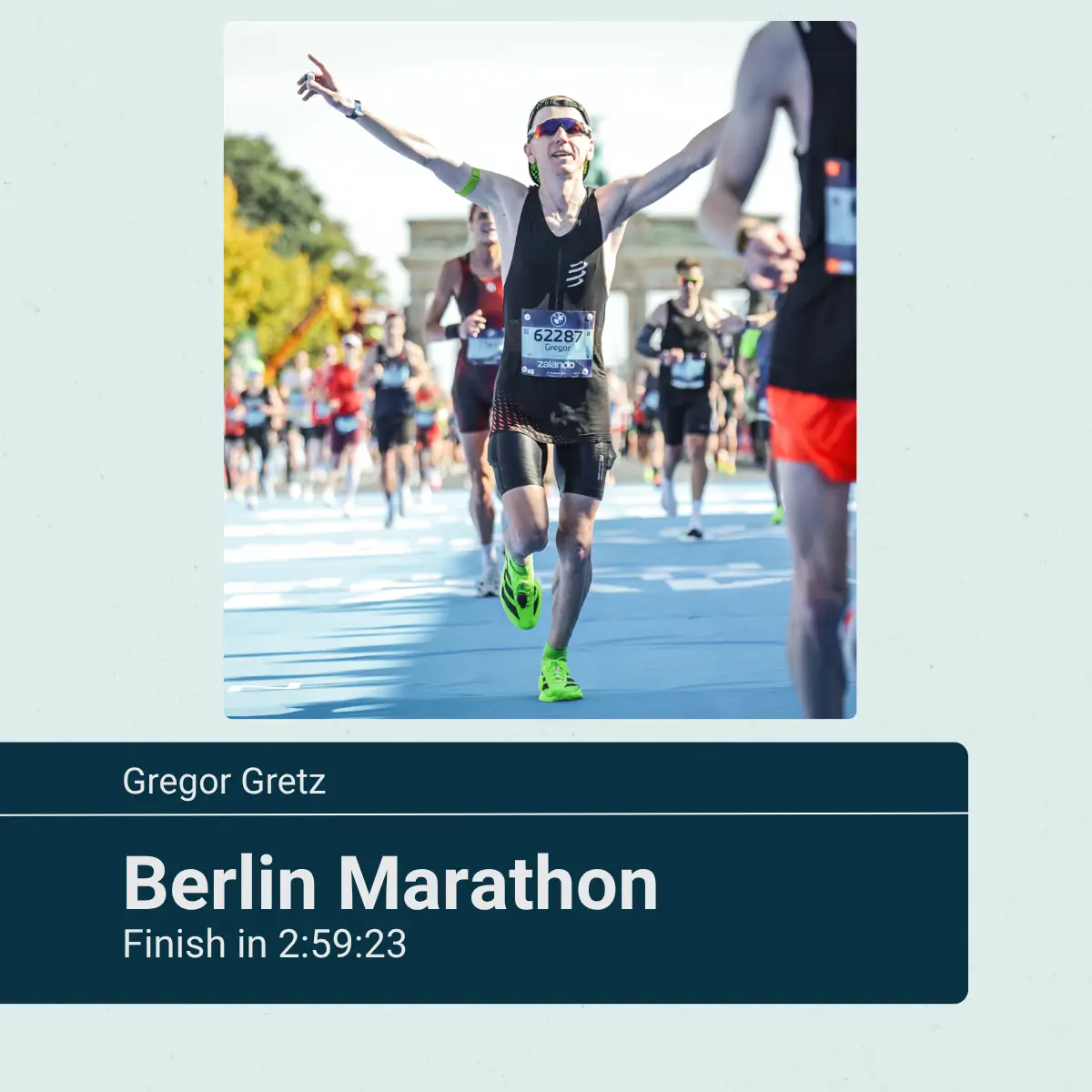
Gregor Gretz
Sub 3 finish at the Berlin Marathon
Example of data-based performance
On September 21, 2025 Gregor Gretz a special race: the Berlin Marathon. With a time of 2:59:23 hours, he broke one of the most symbolic marks in marathon running for the second time – the sub-3-hour barrier. And the temperatures were exceptional too – at up to 27 degrees, it was the hottest Berlin Marathon ever!
This performance is far more than just a finishing time. It stands for a precisely planned and consistently implemented strategy over the entire distance of 42.195 kilometers.
Consistency as a decisive success factor
What makes this race special is not so much a single fast section but rather the remarkable consistency over the entire race. Gregor ran a stable pace from start to finish, without any significant dips in the final kilometers.
Especially in the marathon, where many races are only decided in the final ten kilometers, this form of control is a decisive success factor. It shows that preparation, race organization and load control were optimally coordinated.
From a data perspective, this creates an almost ideal profile: consistent performance, clear structure and a cleanly executed plan.
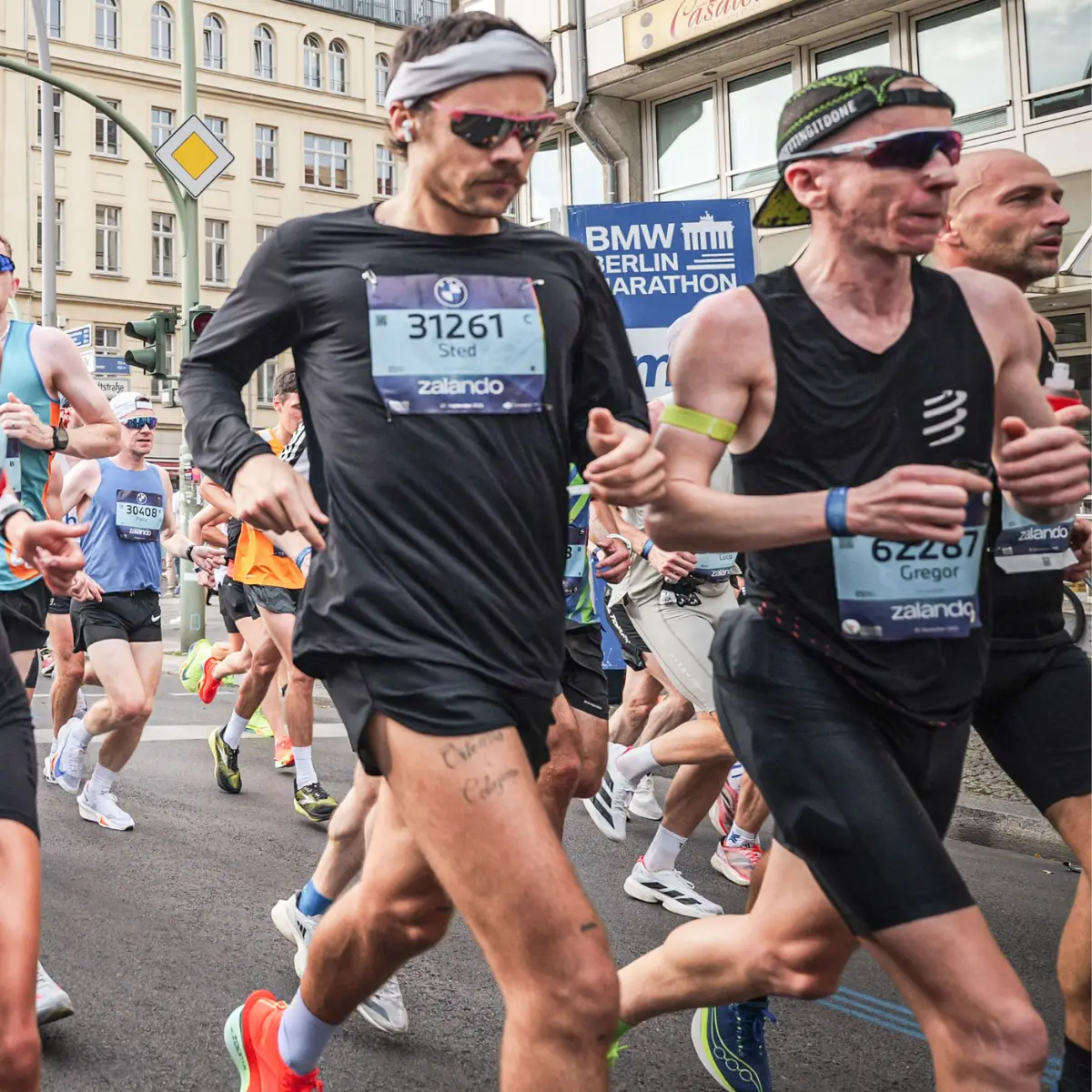
An unusual racing moment
A special side note came up during the race itself. For long stretches, Gregor moved at the same pace as Harry Styleswho also took part in the Berlin Marathon and completed the race in under three hours.
Time and again, parallel sections of the race occurred – two completely different backgrounds, but for that moment an identical rhythm. Such situations can rarely be planned, but are all the more memorable.
Part of a bigger goal: the World Marathon Majors
The Berlin Marathon is part of the World Marathon Majorsa series of the most important marathons in the world. For Gregor, taking part is therefore not an isolated event, but part of a long-term goal: to successfully complete all the races in this series.
The race in Berlin marks another important step on this path – combined with a performance that lays the foundation for the upcoming stages.
Conclusion
A marathon under three hours does not happen by chance. It is the result of discipline, a systematic approach and a clear data-based approach.
Gregor Gretz’s run in the Berlin Marathon shows impressively how these factors can interact. And sometimes additional moments arise that cannot be planned – but make a story special.
We congratulate him on this strong performance and look forward to the next races of the World Marathon Majors.